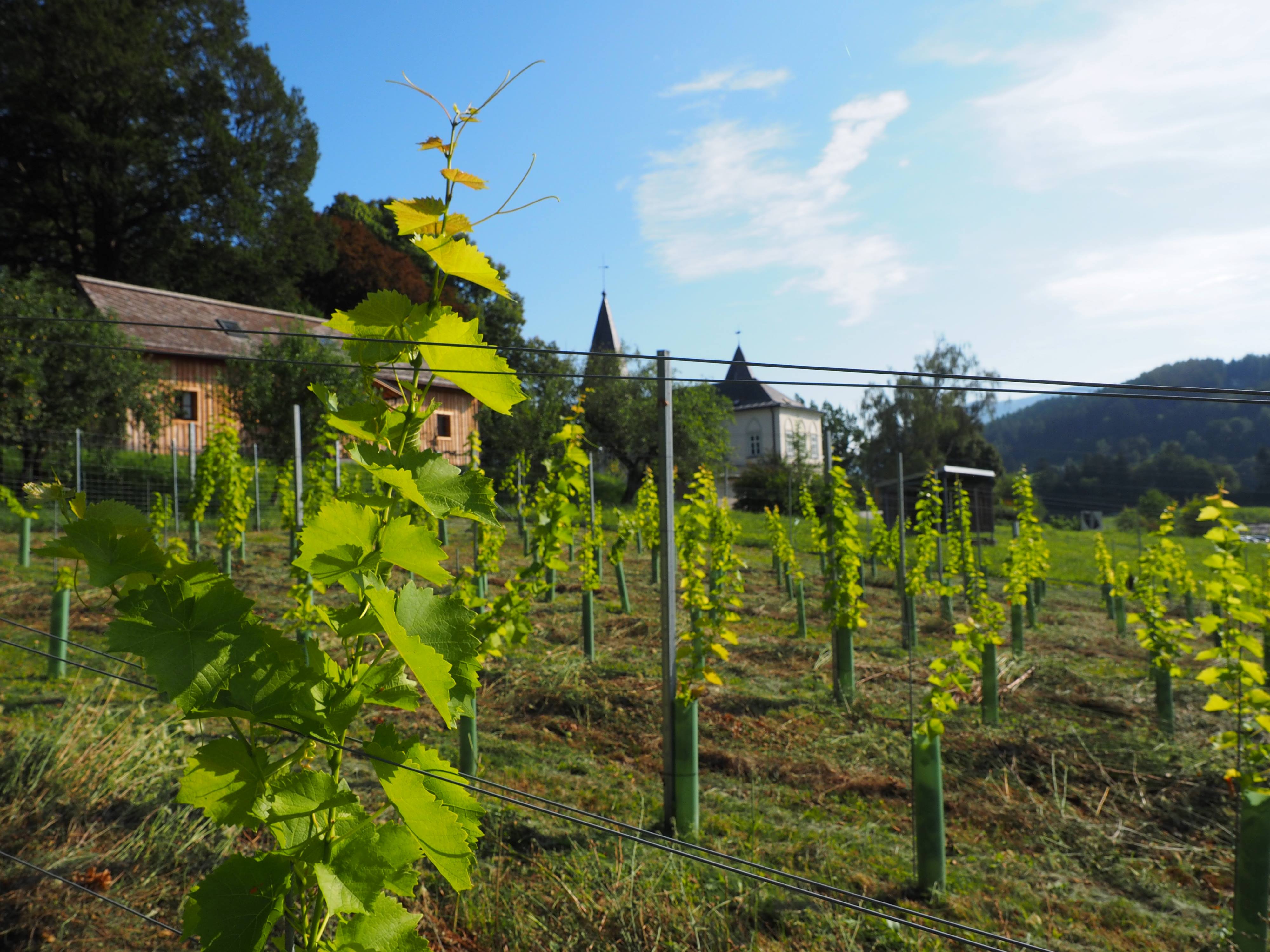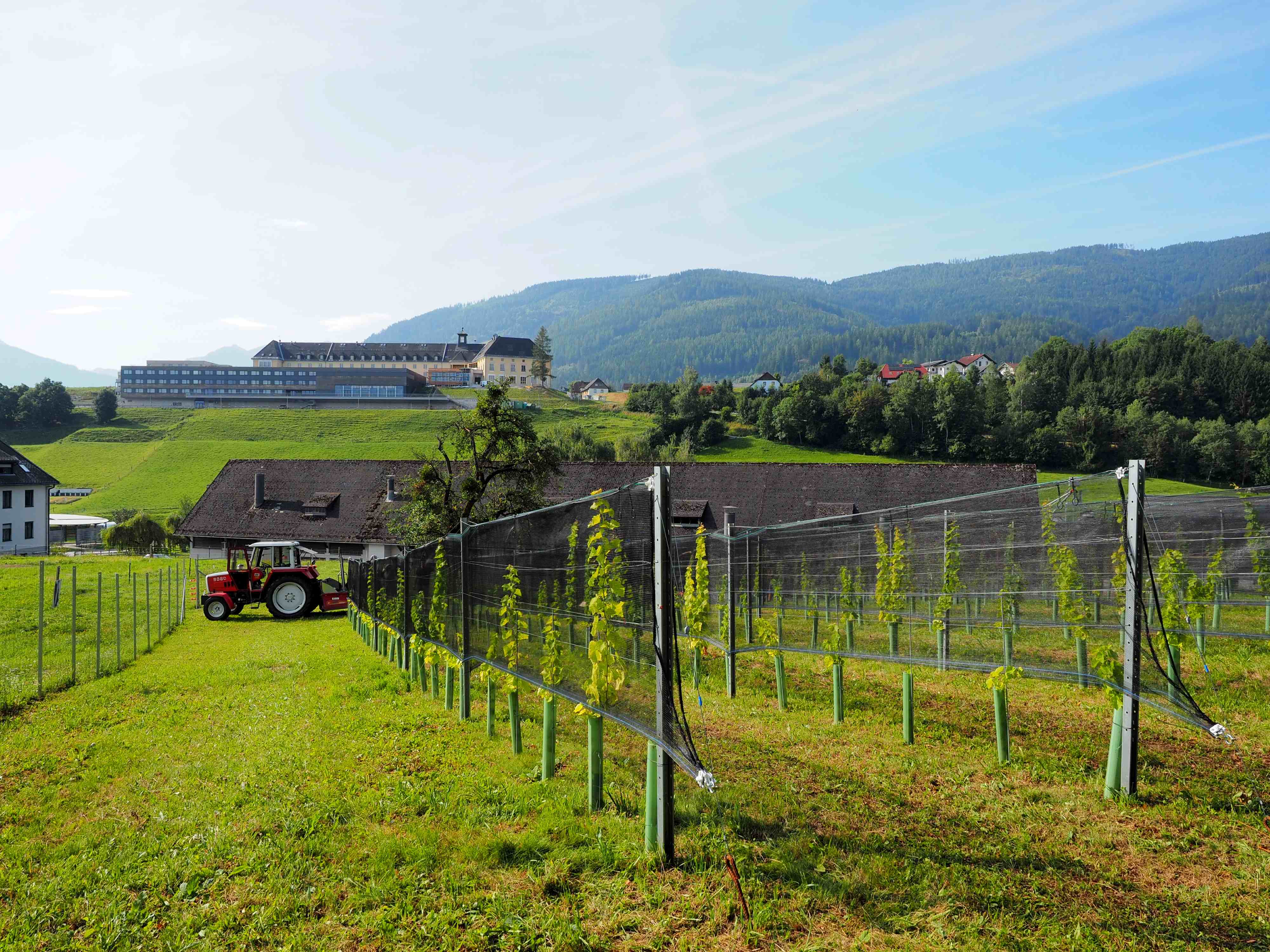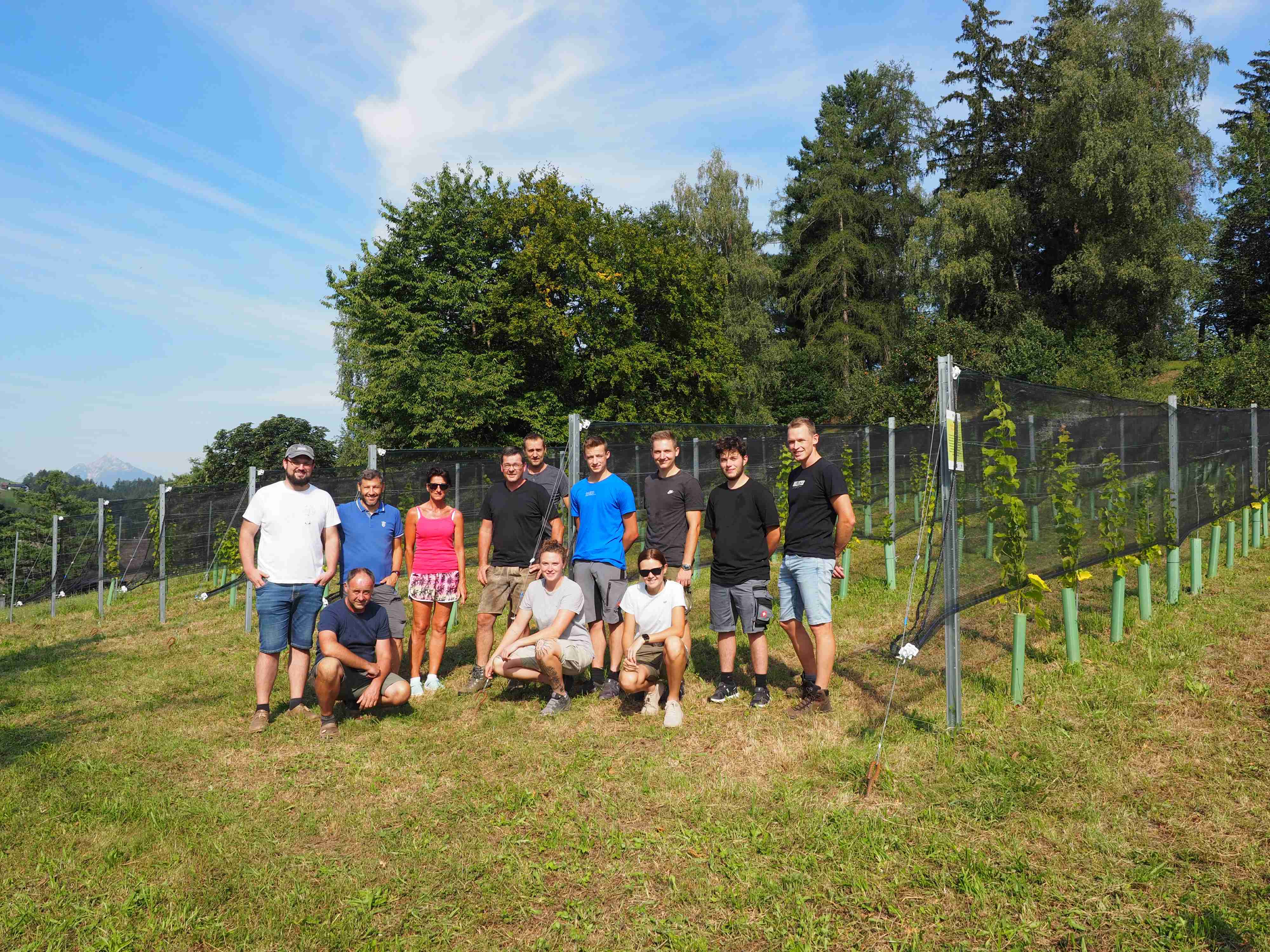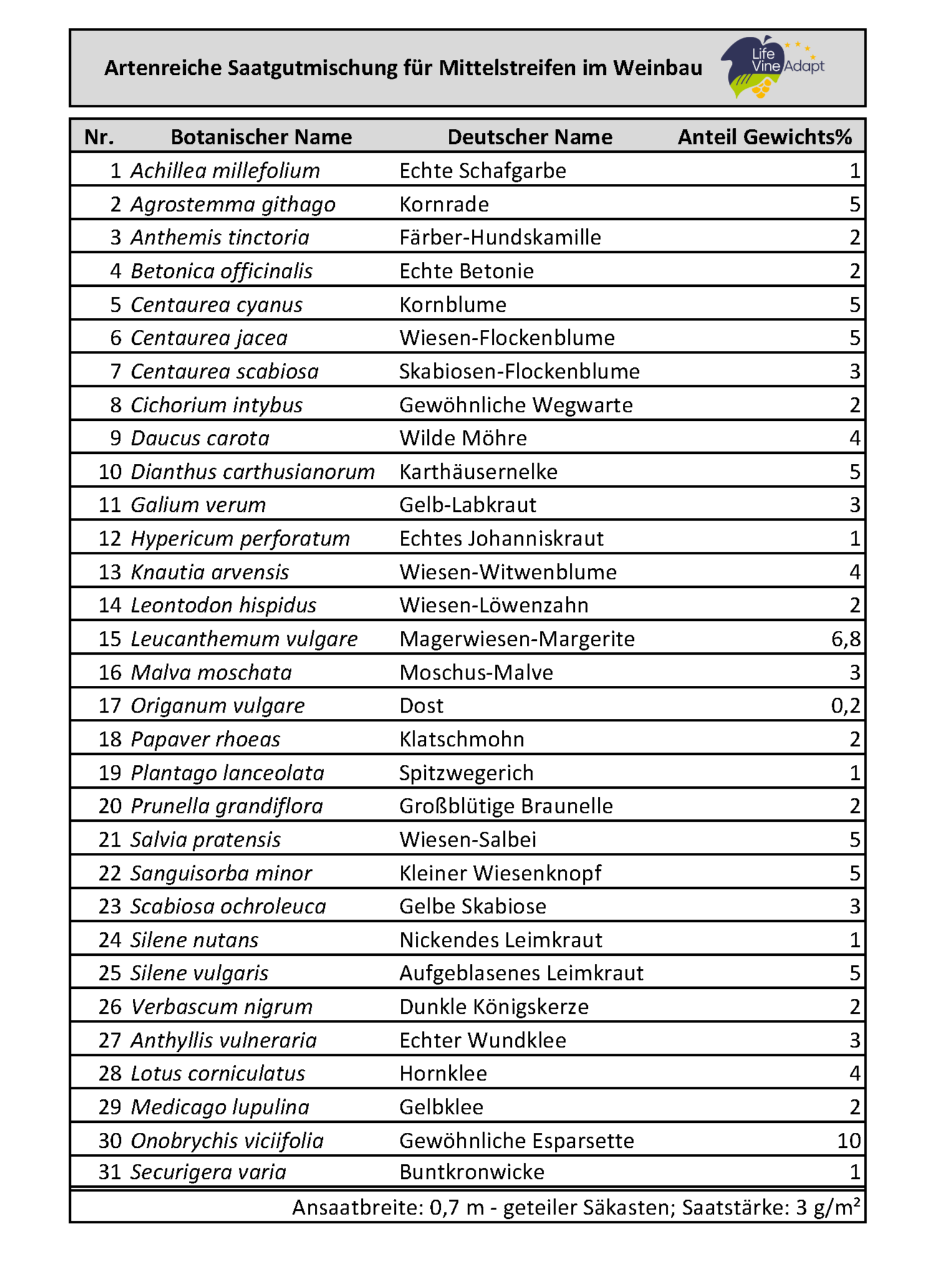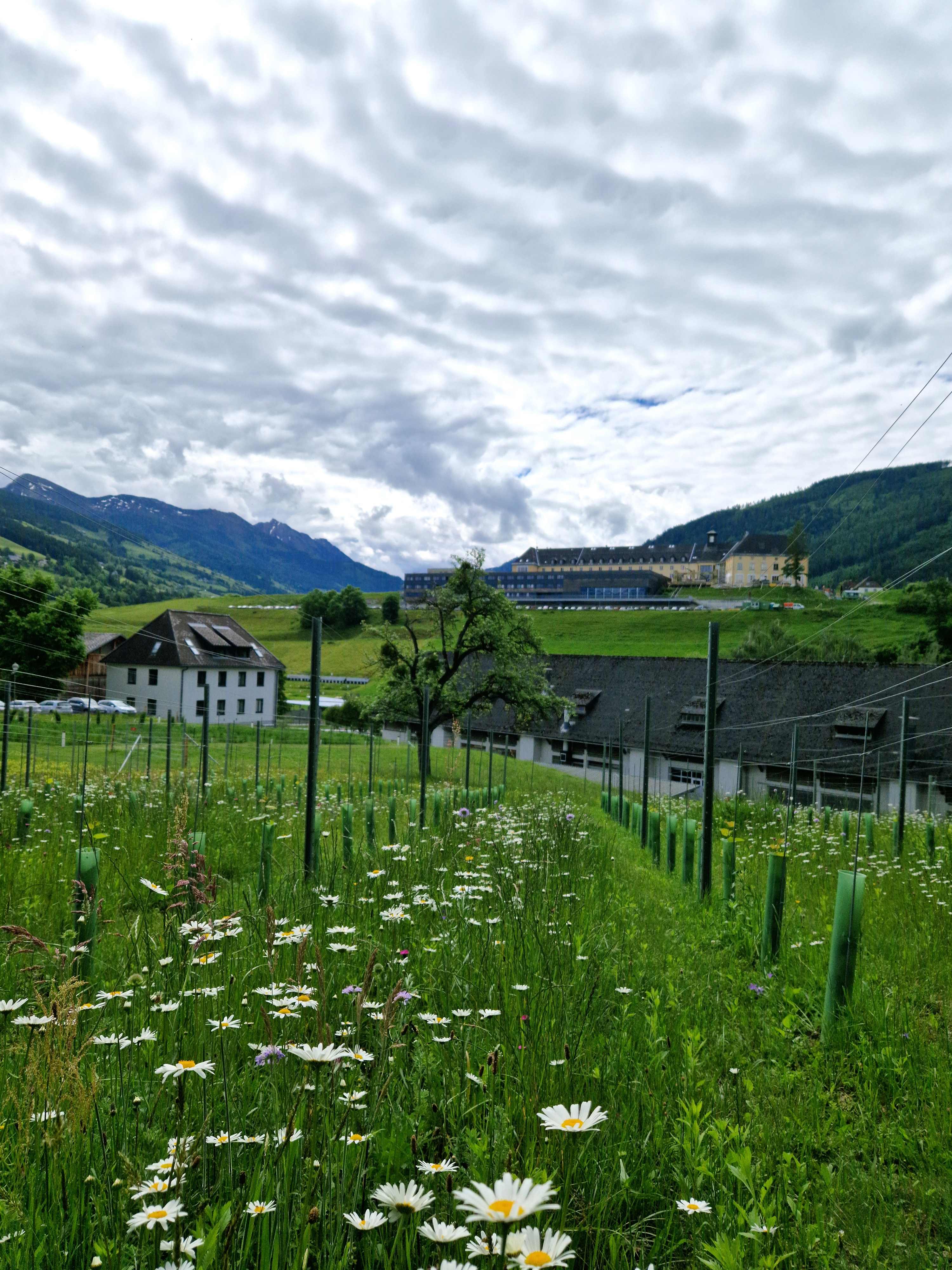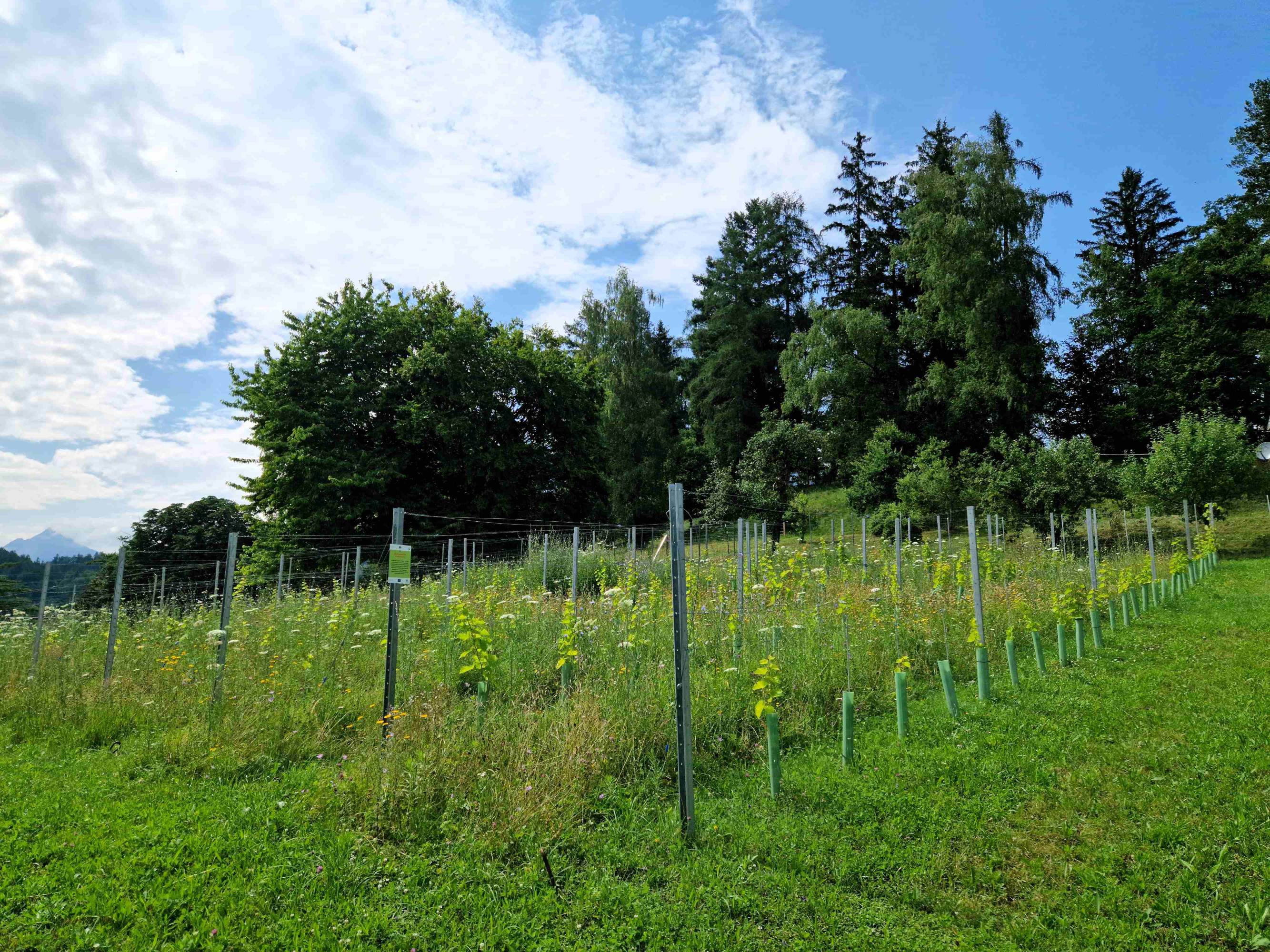

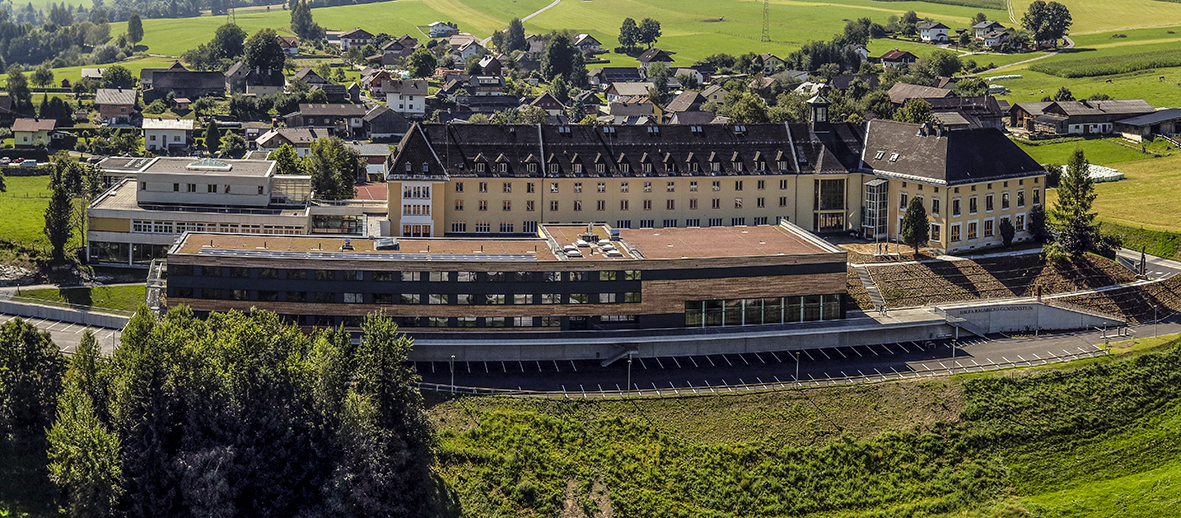
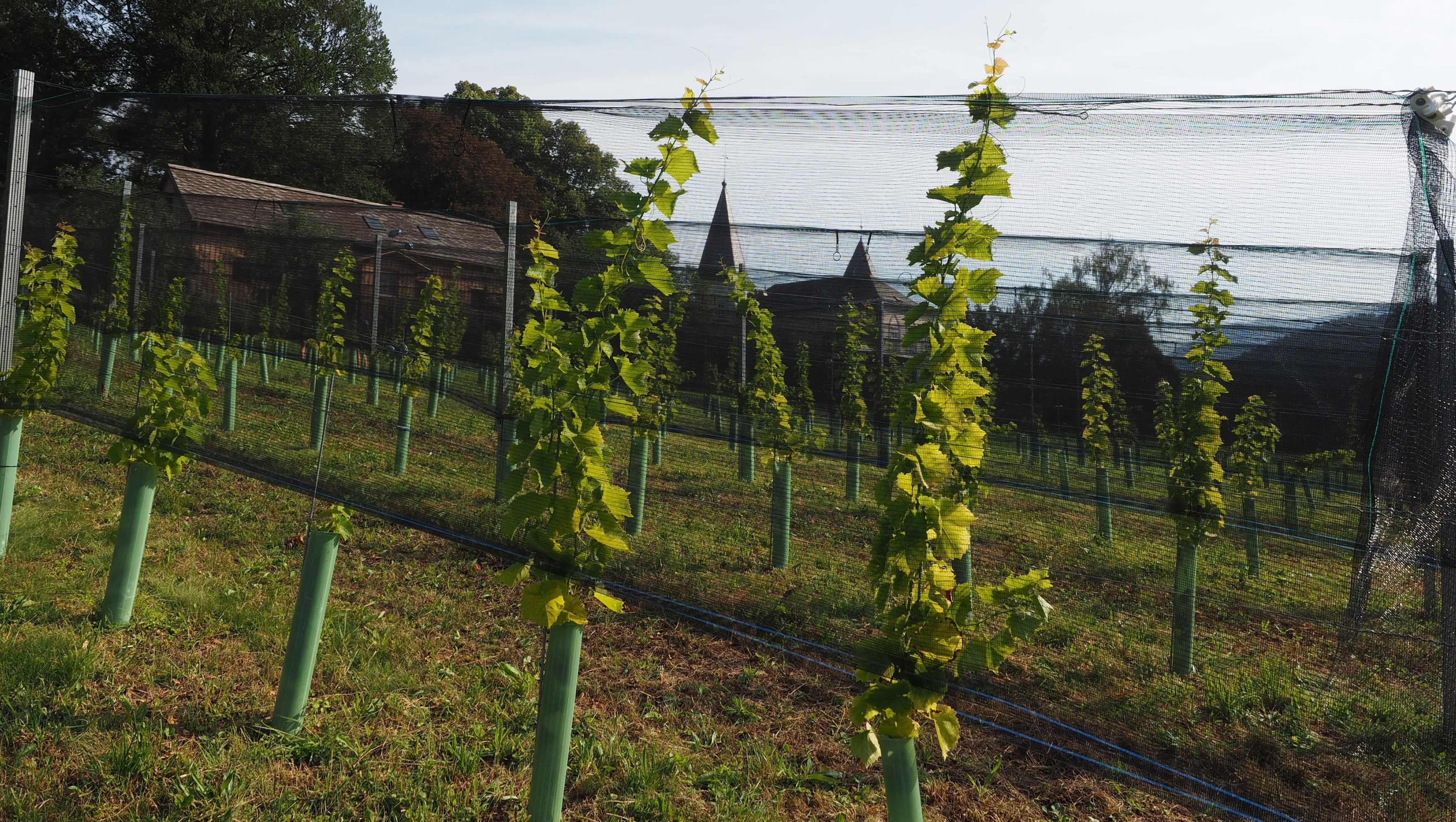
An exchange regarding fertilizer recommendations, plant protection treatments and further care of the vineyard also took place. The flower strips, which were greened with the species-rich greenery from the EU project VineAdapt, were optimally greened against soil erosion and very species-rich and floriferous until mowing at the beginning of August.
Grass mixtures from turf varieties grow in the lane and under the vines, which produce less biomass than grassland grasses and are also durable when crossing (fescue species, English ryegrass, meadow panicle).
We would like to thank our colleagues from Silberberg for the good cooperation in the VineAdapt project and the assembly of the network and the entire vegetation team in Gumpenstein for the maintenance. The maiden harvest of our Muscaris vines is expected in 2025.