This procedure is also used for sulfur fertilization in grassland and arable land. The desulfurization of fuels and flue gases over the last few decades has significantly reduced atmospheric sulfur deposition in Austrian soils. Since a sulfur deficiency impairs a plant's entire nitrogen cycle, sulfur fertilization in the form of elemental sulfur powder is often used. To avoid the need for spreading with a fertilizer spreader, it can also be stirred directly into the manure pit or tank – a recommendation from many companies that sell elemental sulfur or similar products.
A recent case from Austria illustrates how dangerous some seemingly harmless additives can be. A dairy farm in Tyrol, with a state-of-the-art free-stall barn and a manure storage pit partially located beneath the barn, mixed elemental sulfur (25 kg/ha according to the label) into its pit. This corresponds to a quantity of approximately 1.25 kg/m³of manure. Of the 160 m³ of manure, about 100 m³ were then spread on the farm's grassland on the same day. No incidents occurred. As is common practice, a manure pit is not completely emptied, and so manure spreading began again about a month later. Approximately 20 minutes after the manure homogenization process began, the farmer was confronted with a horrific scene when he found his entire herd dead in his barn.
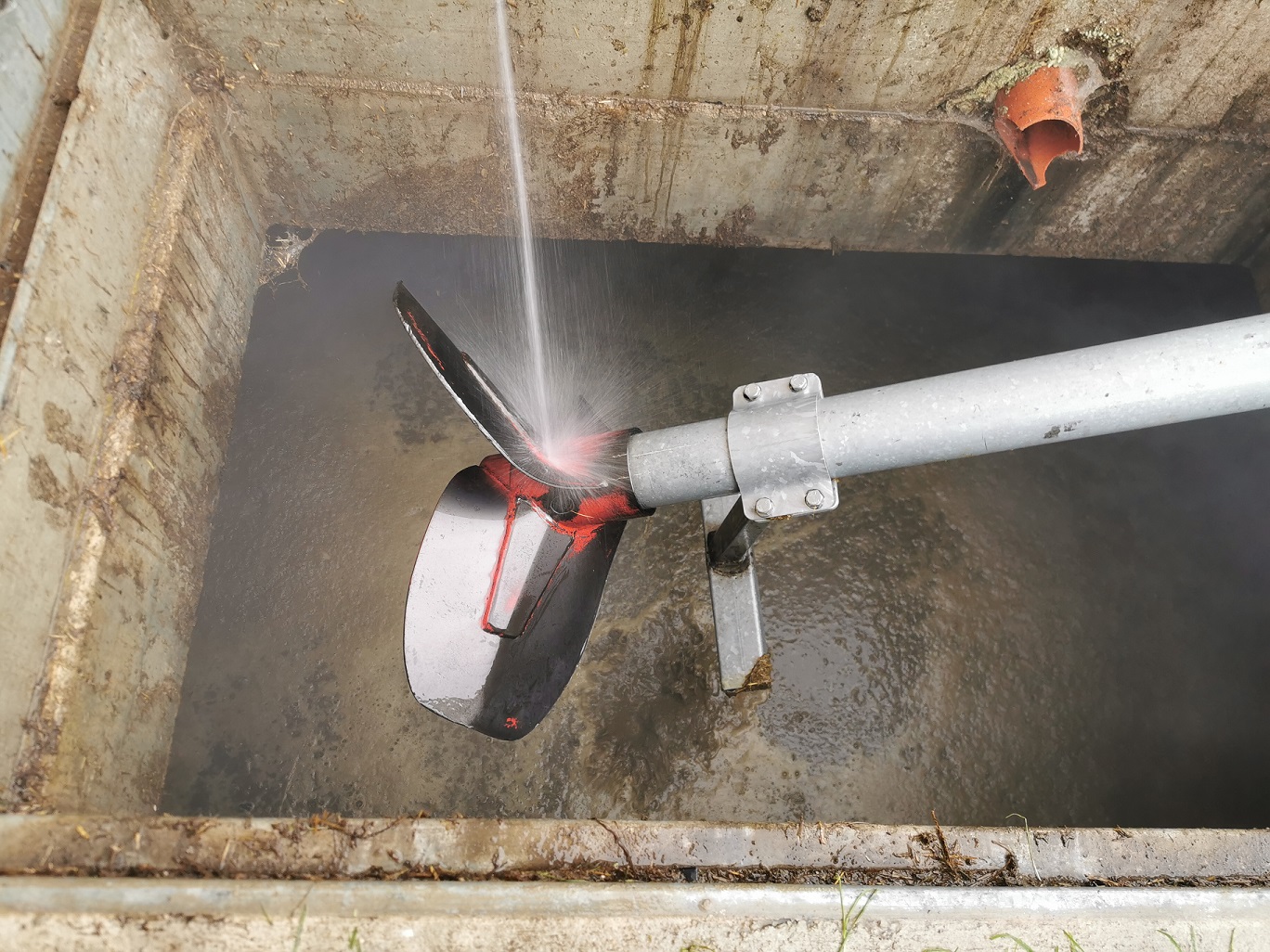
What happened? Some of the gases, especially hydrogen sulfide (H₂S), had dissolved in the liquid manure. The addition of elemental sulfur just over a month prior had further increased the sulfur content in the manure. Microorganisms in the manure processed this sulfur into sulfate, which is responsible for the formation of hydrogen sulfide. During the homogenization of the manure, the harmful gases were released. These "manure gases" escaped from the manure pit due to the resulting turbulence. Through the direct connection to the barn via the manure discharge area with its metal cover, the harmful gases were able to spread into the barn. This led to the death of the entire herd within a very short time. The farmer himself entered the barn, saw the dead animals, correctly assessed the situation, and managed to escape to safety at the last second. Subsequent gas measurements by the fire department revealed H₂Sconcentrationsexceeding 2000 ppm. Measurements taken a month later by the HBLFA Raumberg-Gumpenstein also showed no change. The contamination level remained well above 1000 ppm. Due to this incident, a small-scale experiment was conducted at the HBLFA Raumberg-Gumpenstein.
Limit values forH₂S:
- Maximum 5 ppm in stables
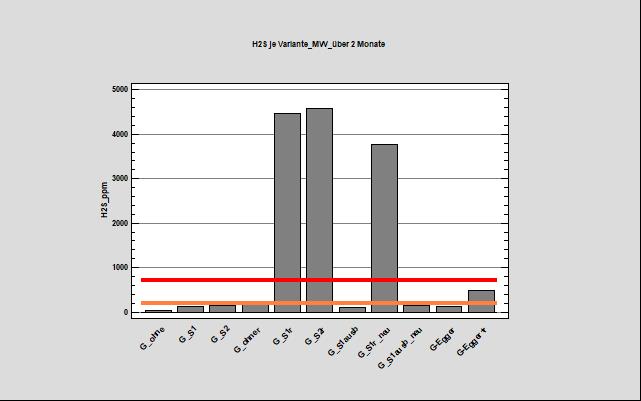
- At levels as low as 200 ppm, the first signs of paralysis appear in the olfactory receptors
- Respiratory paralysis begins at 700 ppm
Small-scale experiment at the HBLFA Raumberg-Gumpenstein:
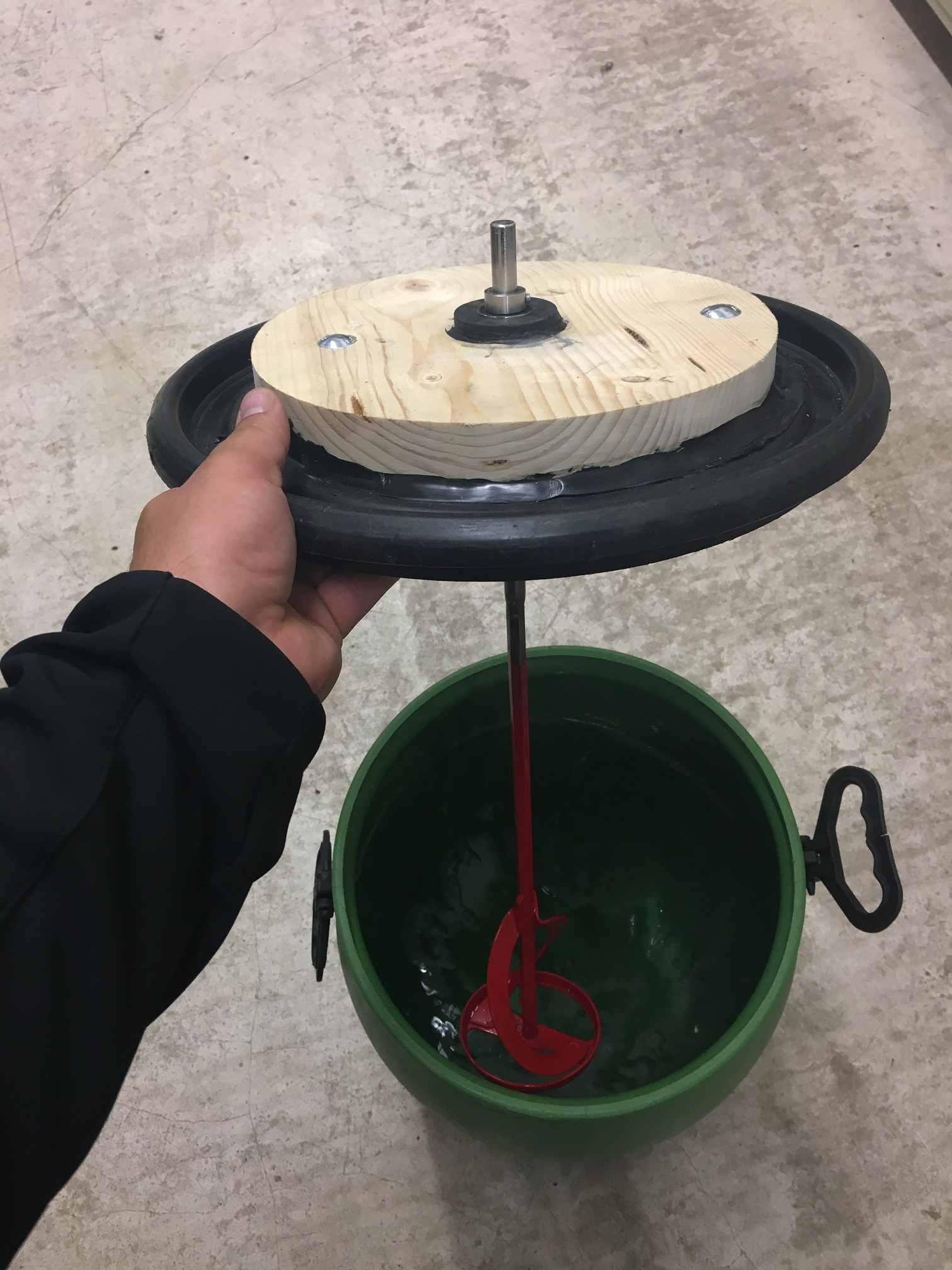
60-liter drums were filled with liquid manure and mixed with different application rates (1.25 and 2.0 kg/m³ liquid manure) of elemental sulfur. Three drums of each variant were filled to ensure sufficient replication. Subsequently, the individual variants were measured twice weekly over a period of two months using a gas detector. Of particular note are all variants to which elemental sulfur was added and which were homogenized (G_S1r; G_S2r; G_S1r_neu). These showed significantly elevated H₂S concentrations on averageoverthe two-month measurement period, in some cases reaching up to 4500 ppm. It should also be noted that even untreated liquid manure tends to form hydrogen sulfide up to the threshold of approximately 200 ppm.
What should be done?
Liquid manure is an extremely complex medium that cannot be standardized. This means that no general and universally valid statements can be made about which substances or gases are produced when manure additives are added, whether used as fertilizer or to combat emissions. In this case, the addition of elemental sulfur demonstrated how quickly a harmful gas like hydrogen sulfide can form. Since manure storage facilities are not emptied completely and all at once, but are usually spread over several days (depending on the weather) or the manure is divided into multiple applications, it must be homogenized frequently. This can lead to serious incidents, which can hopefully be avoided in the future through the use of tested and correctly applied manure additives.