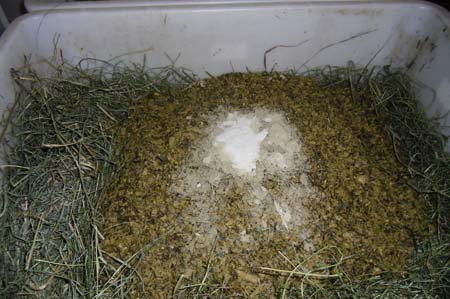
Beyond their use as feed additives, migulators and microorganisms are being promoted as part of a sustainable circular economy. In addition to improving the animals' digestive performance, the use of these preparations is intended to positively influence barn hygiene (germ reduction) and the barn climate (active binding of odors). Their use in regulating manure quality (nitrogen binding, odor control) can also increase the effectiveness of farmyard manure. However, a scientifically sound assessment of the efficacy of these now aggressively advertised feed additives is still pending and requires objective evaluation.
Project goals:
- Testing the effect of clinoptilolite on feed intake, milk yield and quality, as well as on blood concentrations of macroelements in lactating dairy cows:
Most studies conducted to date on the use of zeolite in dairy cow feed have used synthetically produced zeolite A. These feeding trials were carried out on dry cows, primarily to examine the effect on calcium metabolism and, consequently, the use of the feed additive for the prevention of milk fever and subclinical hypocalcemia. However, the few studies conducted with lactating dairy cows have found negative effects of zeolite supplementation on milk production. There are hardly any studies in the literature on the use of natural zeolite (clinoptilolite) in cattle or lactating dairy cows. In contrast to synthetic zeolite, most studies with naturally derived material (clinoptilolite) have not observed any negative effects on mineral metabolism or milk production parameters.
- Testing the use of the lactic acid bacteria strains L. rhamnosus and L. paracasei (in combination with an herbal extract) in dairy cattle feeding:
The mechanisms of action and effects of direct-fed microbials (DFM) on production parameters (various bacterial strains, yeasts, fungi, and mixtures thereof) in ruminant rations have been described in several review articles. In lactating dairy cows, feeding a synbiotic consisting of Lactobacillus casei subsp. casei and dextran resulted in both significantly higher milk yields and higher milk solids content. Feed additives based on Lactobacillus sp. have also had a significant impact on the daily milk fat production in other trials. Since the mechanisms of action are partly dependent on the specific bacterial strains used, preparations (especially mixtures) must be individually tested for their effects. Experimental studies on the bacterial strains used in this project are largely lacking.
- Investigation of manure quality after feeding clinoptilolite and lactic acid bacteria:
Based on measurements of physical parameters from monitoring in experimental slurry tanks and chemical analysis, an assessment of the soil compatibility and climate relevance of the slurry will be carried out. For example, the pH value has a significant influence on nitrogen emissions.
Further information on project implementation can be found in the database for research and sustainable development (Dafne) -> Link