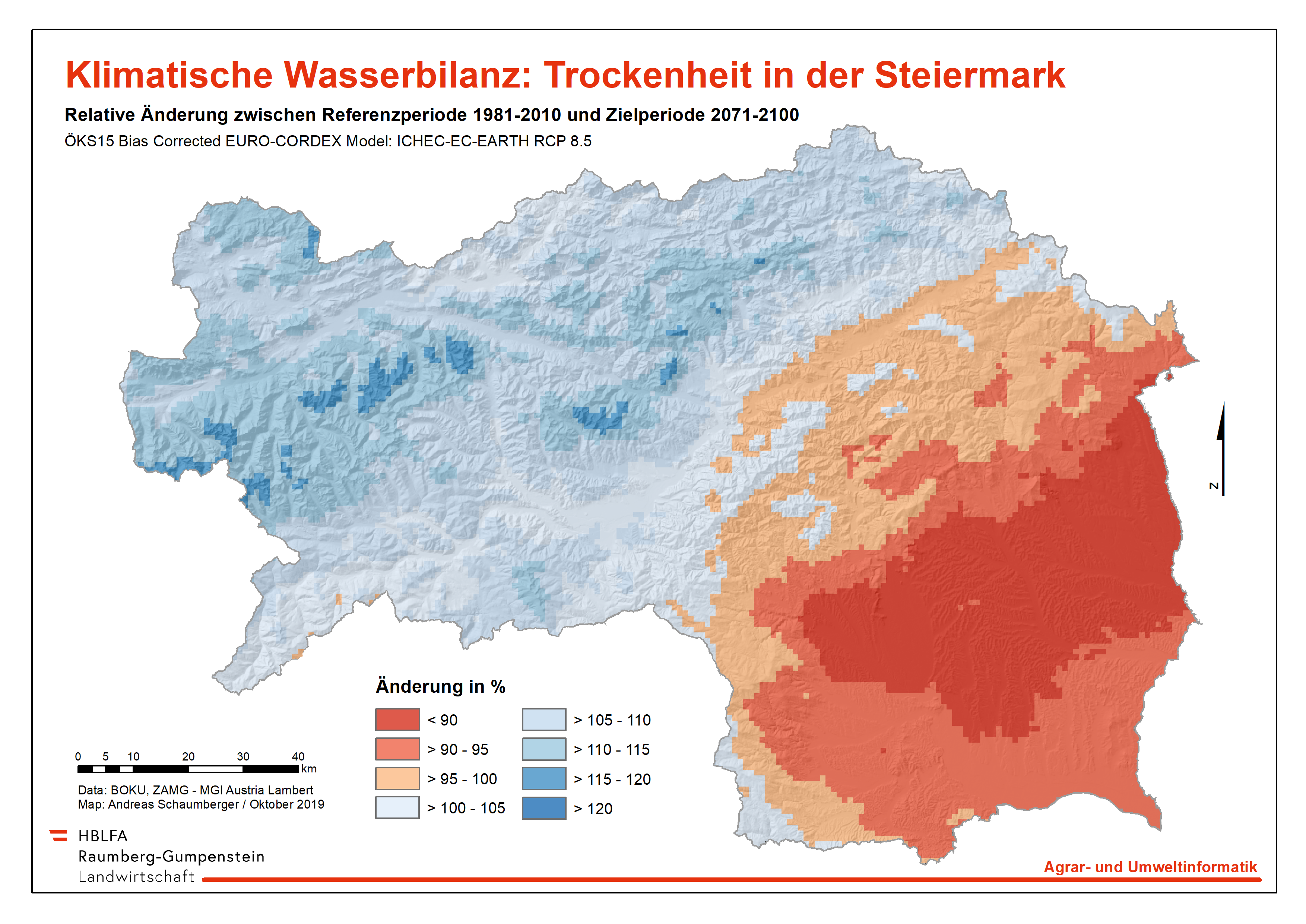
At higher elevations, the start of the growing season is expected to shift further due to the typically longer snow cover period. This results in a very strong spatial differentiation in the growing season for grassland in the Austrian mountains. At higher elevations, the often significantly shorter growing season is one of the main reasons for the limited land use potential. Lower temperatures also cause the plant community to adapt, which, together with the reduced productivity of the soil, leads to lower yields.
{rsfiles path="Research reports/Environmental resources_in_greenland/Biodiversity/2_2012_GIS-based analysis of spatio-temporal variation.pdf"}
{rsfiles path="Research reports/Environmental resources_in_Greenland/Biodiversity/2_2012_GIS based analysis of spatio‐temporal variation_poster.pdf"}
{rsfiles path="Research reports/Environmental resources_in_greenland/Biodiversity/2_2008_Spatial modeling_Vegetation period_Poster.pdf"}