

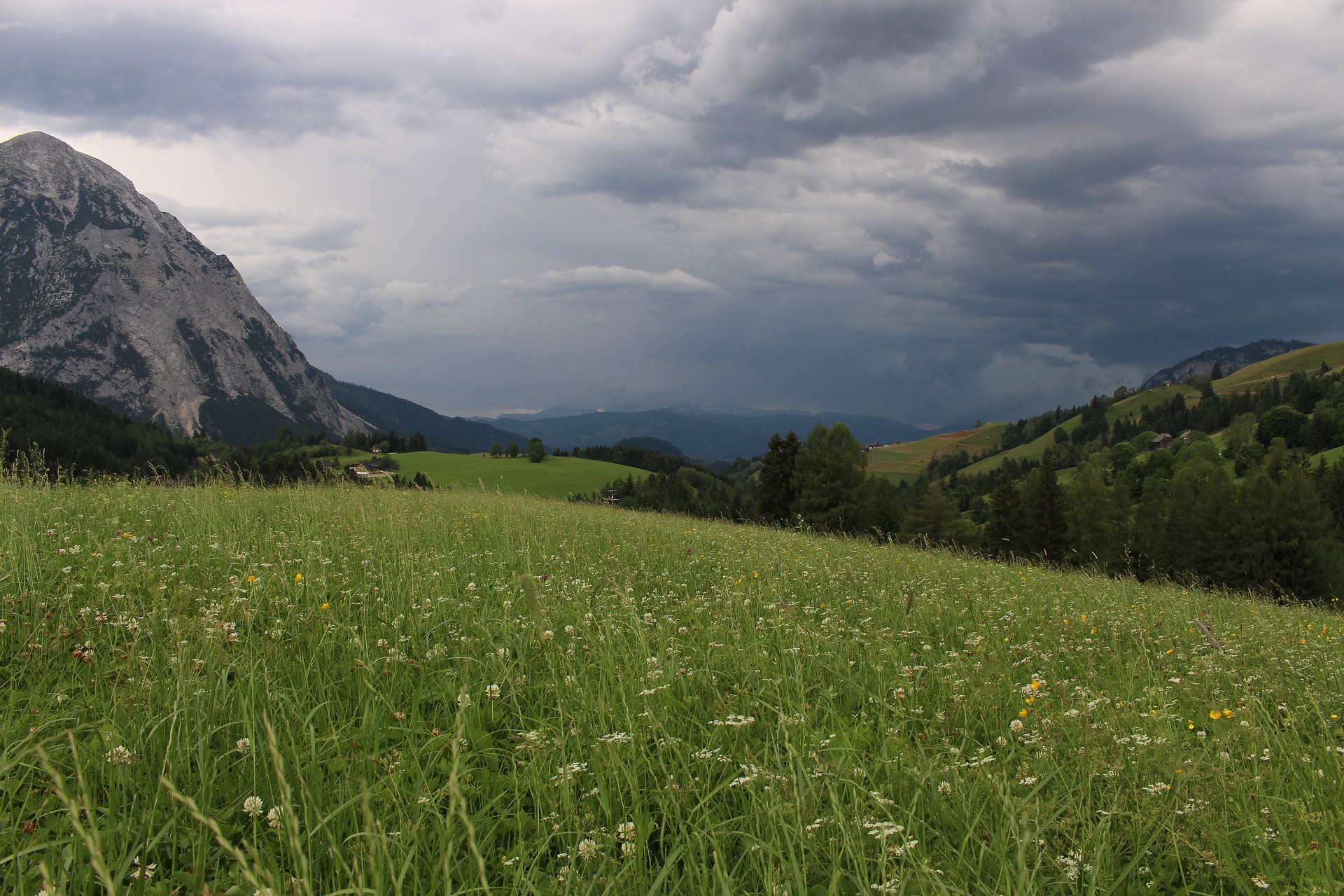

Whether they realize it or not, people who hike, ski, or simply enjoy the sun on alpine pastures are utilizing an agricultural ecosystem service for which they usually don't even pay. The point here is not to turn every alpine pasture into an amusement park that charges admission.
Alpine pastures in Austria
Alpine pastures have high cultural, ecological, and touristic value. This is based on the centuries-old, mostly cooperative, management of grassland in mountainous regions. The economic necessity of managing alpine pastures for successful food production in the valleys, to ensure sufficient fodder during the winter, is not always present. Additional costs for fencing, herding, and transporting the animals, as well as a general decline in the number of farms, have led to a decrease in the number of managed alpine pastures, and not just since the reintroduction of the wolf. While there were over 9,100 alpine pastures in 2000, by 2020 this number had fallen to around 8,000.
What services do alpine pastures provide?
Alpine pastures accomplish a great deal: in addition to their classic functions, such as producing food on extensive grasslands and protecting against natural hazards (avalanches, erosion), they also preserve diverse animal and plant species and provide cultural services like conveying identity and traditions, as well as offering recreational opportunities for visitors. The high biodiversity of alpine pastures is also evident in the milk of alpine cows that receive no supplemental feed. This milk has a high content of omega-3 fatty acids and a lower proportion of saturated fatty acids, as a 2013 study by Margit Velik demonstrated. Genetic analysis of milk can even reveal the diversity of alpine pastures and determine their species richness, as recently proven by the Innsbruck zoologist Daniela Sint.
conveying the value of alpine pastures
During a presentation on the topic of "Ecosystem Services of Alpine Pastures," we asked the audience which services of alpine pastures they considered important. The services mentioned can be categorized into seven groups:
- Traditional food production
- Landscape as "food for the soul"
- Nature experience for tourists
- Alpine culture and cultural heritage
- Nature conservation and biodiversity
- Animal welfare
- Maintaining vitality in rural areas
It is noteworthy that, with the exception of protection from natural hazards, all the classic functions of the alpine pasture were mentioned. The subsequent question about potential customers and their expectations unleashed a high degree of creativity. This led to innovative marketing ideas, such as the alpine pasture as a place of respite for burnout patients, the commodification of scenic views to corporations for the construction of chalet villages, or the creation of nature-based play and leisure areas.
However, the majority of the marketing ideas aimed to communicate the existing and traditional services of the alpine pasture in such a way as to raise awareness of their value among a larger number of customers. For many of these offerings, there are already established examples.
| Services provided by the alpine pasture owners as a prerequisite | Mediation / Commodification |
| Is it any good? | I want it! |
| Design of visitor points, rest areas, fountains, etc | Nature experience for tourists, relaxation |
| Organizing alpine events: alpine fair, cattle drive up to the alpine pastures, cattle drive down from the alpine pastures | Alpine culture and intangible cultural heritage |
| Preserving and passing on experiential knowledge | Alpine culture and intangible cultural heritage |
| Keep areas clear through grazing, mowing, and clearing | Beautiful scenery, "food for the soul" |
| Maintain biodiversity-rich (feeding) areas | Nature conservation / Biodiversity |
| Grazing of the alpine pasture | Animal welfare / Animal health |
| Preservation of agricultural businesses | "Vitality" rural area |
| Production and processing | Traditional food production |
Alpine pastures are preserved
It must be emphasized that none of these marketing opportunities alone can guarantee the continued existence of alpine pastures. Existing subsidies, such as compensation payments for mountain farms and for nature conservation measures, must also be maintained. Additional communication measures are essential to create a shared awareness of the value of alpine pastures.
Furthermore, mandatory sustainability reporting by companies introduces additional opportunities for compensating for services. The concept of agro-ecosystem services provides an argumentative basis for this. This concept recognizes both the services nature provides for agriculture and the services that site-appropriate agriculture provides for society.
There are various ways to compensate for services rendered. In addition to traditional subsidies, there are contractual solutions within the value chain. Alpine farmers can join together in marketing cooperatives to achieve premium prices for their alpine products on the market. Examples of this are "Almo" and "Bio vom Berg," where this concept has been successfully implemented.
Another option is results-based contractual solutions. This requires making performance measurable using indicators and target values. A systematic survey of ecosystem services provided by agriculture was developed within the framework of the "Added Value of Mountain Agriculture" project and is available for implementation projects as part of the FarmLife life cycle assessment tool.
Further links and literature
Alm-at (2021) Alpine farming presented in figures. Available at: https://www.almwirtschaft.com/almwirtschaft/almwirtschaft-in-zahlen (06-2024).
Kirner, L. and Wendtner, S. (2012) Economic perspectives for alpine farming in Austria within the framework of the CAP until 2020 and after the expiry of the EU milk quota. Research report, Agricultural Policy Working Paper No. 41, AWI-Federal Institute for Agricultural Economics, Vienna.
Velik et al. (2013) Fatty acid profiles of Austrian pasture-raised, alpine and supermarket milk as well as milk from maize silage ration. Symposium on Organic Agriculture 2013, 1 – 2, HBLFA Raumberg-Gumpenstein.
https://tirol.orf.at/stories/3280308/


Photo credits: Finotti, E. and HBLFA Raumberg-Gumpenstein