Austrian Conference on Organic Agriculture

Proceedings of the Austrian Conference on Organic Agriculture, held on November 16, 2023, at the HBLFA Raumberg-Gumpenstein. Published by the HBLFA Raumberg-Gumpenstein. The contributions cover green biorefinery and feed charcoal (LIFE Farm4More project), protein supply, animal breeding, soil fertility, climate change adaptation in grassland, and organic education.

  • Biorefining of red clover and clover grass: The demonstration plant in Japons is presented. From field to finished feed, dry matter losses were 20.4% for clover grass and 5.8% for red clover.
  • Press cake in dairy cows: A proportion of 25% of the basic feed (18.5% of the ration) had no negative effect. At 50%, feed intake decreased: V2 18.19 kg DM/d, V1 19.15 kg DM/d.
  • Pressed juice concentrate in organic chicken fattening: With 9% in the ration, the feed requirement increased from 2242 g DM (control) to 2620 g DM per kg of weight gain.
  • Feed charcoal (biochar): Methane emissions were not reduced in dairy cows. No significant differences in NH3 emissions were observed in broiler chicken farming.
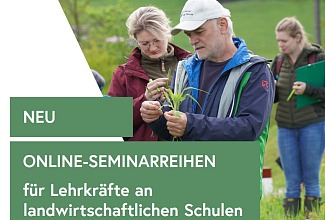
  • Further contributions: KLEEKRAFT concept, future viability of organic animal husbandry, organic dairy cattle breeding for lifetime performance, 42 years of DOK trial with 15% lower organic yields, paddock grazing, red clover reseeding and seeding strips, Bischof farm practice and organic teaching (seminar series, biola.at).

Contact persons: Andreas Steinwidder, Manuel Winter, Reinhard Resch, Georg Terler, Michael Kropsch

LATEST POSTS

SELECTED ITEMS

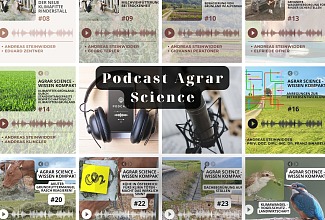
PODCASTS :/> AGRICULTURAL SCIENCE - KNOWLEDGE IN A COMPACT WAY

Our Raumberg-Gumpensteiner podcasts and film-based technical information.

Federal Higher Teaching and Research Institute for Agriculture Raumberg-Gumpenstein

The HBLFA Raumberg-Gumpenstein unites research and teaching under one roof and is the largest department of the Ministry of Agriculture, Forestry, Climate and Environmental Protection, Regions and Water Management. Austrian agriculture relies on a comprehensive quality strategy. The HBLFA Raumberg-Gumpenstein supports this approach through research, education, consulting, and teaching.

Research and teaching at the cutting edge

In addition to a modern school for over 400 students, HBLFA Raumberg-Gumpenstein. the teaching and training facilities include a boarding school, both a conventional and an organically managed teaching and research farm with its own livestock, a teaching forest, various practice rooms and workshops, a processing center for meat, milk, and fruit, a chemistry lab, a biology lab, and a teaching biotope. The close integration of teaching and research is important to us. "Science in School" and modern methods of knowledge transfer by motivated instructors are hallmarks of the

In applied research, we work with enthusiasm at our five locations and in on-farm projects, addressing the future challenges facing the Austrian agricultural and food sectors. We utilize innovative experimental facilities, laboratories, barns, and diverse test plots. The rapid dissemination of our knowledge to practitioners, consultants, educators, and the public is important to us. To this end, we collaborate with universities and research institutions, consultants, associations, processing and marketing companies, educational institutions, policymakers and stakeholders, NGOs, and especially with farmers from Austria and abroad. Our research findings, as well as our modern communication tools and educational events, are highly valued.