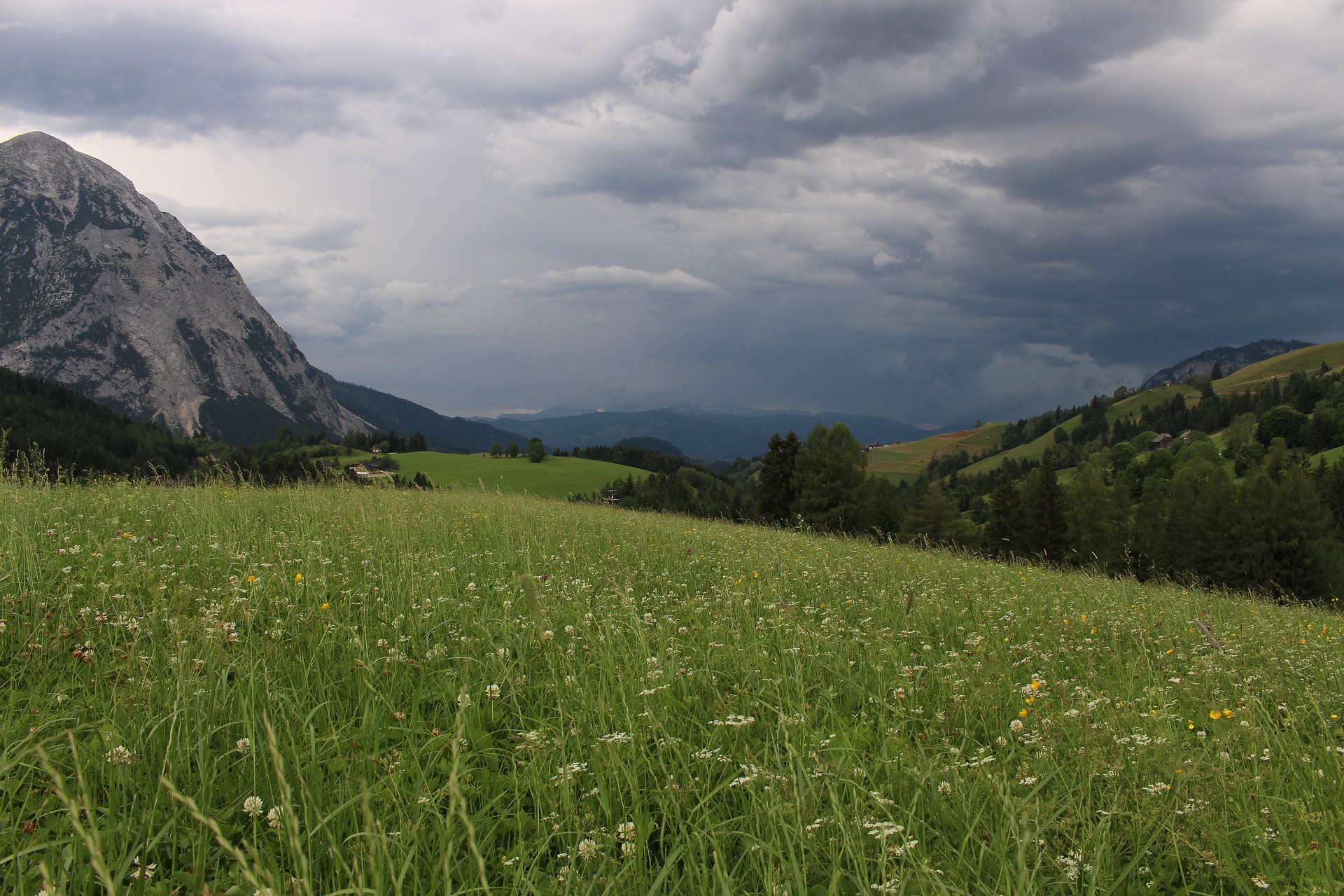
It's important to note that not every brown meadow is actually dead. Many grassland plants can survive periods of drought via underground stems and rhizomes and sprout again when moisture returns. However, where larger gaps have formed, late summer offers an important opportunity to improve the vegetation.
- Is overseeding or reseeding sufficient ?
- When is reseeding necessary?
- Which grasses, legumes, and herbs are suitable for drought-prone locations?
- And what should be considered when fertilizing ?
discusses this topic Steinwidder In this episode of "Agricultural Science – Knowledge in Brief," Lukas Gaier, grassland expert at the HBLFA Raumberg-Gumpenstein. He provides practical tipson how to assess and rehabilitate damaged grassland stands and how to lay the foundation now for dense, productive, and stable stands in the coming year.
The timing plays a particularly important role: the period from August to the beginning of September is highlighted for reseeding and new planting.
Further links:
Alpine Expert Forum 2025: Grassland Varieties and Mixtures for the Future
Pictures


Podcast summary: Targeted restoration of grassland after heat and drought – the most important findings
Note: This summary provides a concise overview of the podcast's main points. For a comprehensive understanding of the context and further background information, listening to the full podcast episode is recommended.
The increasing frequency of heat waves and droughts poses significant challenges for many grassland farms. Damaged stands, yield losses, and patchy swards necessitate targeted measures to ensure the long-term productivity of these areas. In this interview Dr. Lukas Gaierthe options for improving grassland conditions after dry years and what farms should pay particular attention to.
A key issue is the assessment of drought damage. It turns out that many grassland plants can survive even prolonged periods of drought and sprout again after sufficient rainfall. The crucial factor is correctly assessing whether overseeding, reseeding , or a complete reseeding is necessary.
Furthermore, suitable drought-tolerant grasses, legumes, and herbs presented, along with recommendations for fertilization and stand management. The publication provides valuable practical tips for successful grassland restoration under the conditions of climate change.
Key findings
- Not every brown meadow is permanently damaged.
- Reseeding can efficiently close gaps in the stand.
- Late summer is particularly suitable for renovation work.
- Drought-tolerant species are gaining in importance.
- Adjusted fertilization supports regeneration.