


Since its founding, the program has hosted several workshops and events. Project-based learning and research internships enable young researchers to make significant contributions to climate protection. They participate in awareness-raising initiatives, such as the Campus Next Generation Gröbming, the development of regional guiding principles, and act as multipliers for innovative management and production processes that promote sustainable development. Another distinctive feature is the program's high school diploma theses on climate-related topics, which are often supported by the expertise of leading partners from education and industry.
The focus is on sustainability in everyday life
The school's carbon footprint assessment aims to make daily life at the school and boarding school more sustainable. Measures such as saving electricity and water, waste reduction and separation, and the sustainable consumption of ecologically valuable food will receive even more attention in the future.
Initiatives and projects to promote biodiversity, such as the creation of flowering areas and habitats for insects, as well as the removal of neophytes, the greening of classrooms for an improved indoor climate, and much more, are implemented through teamwork.
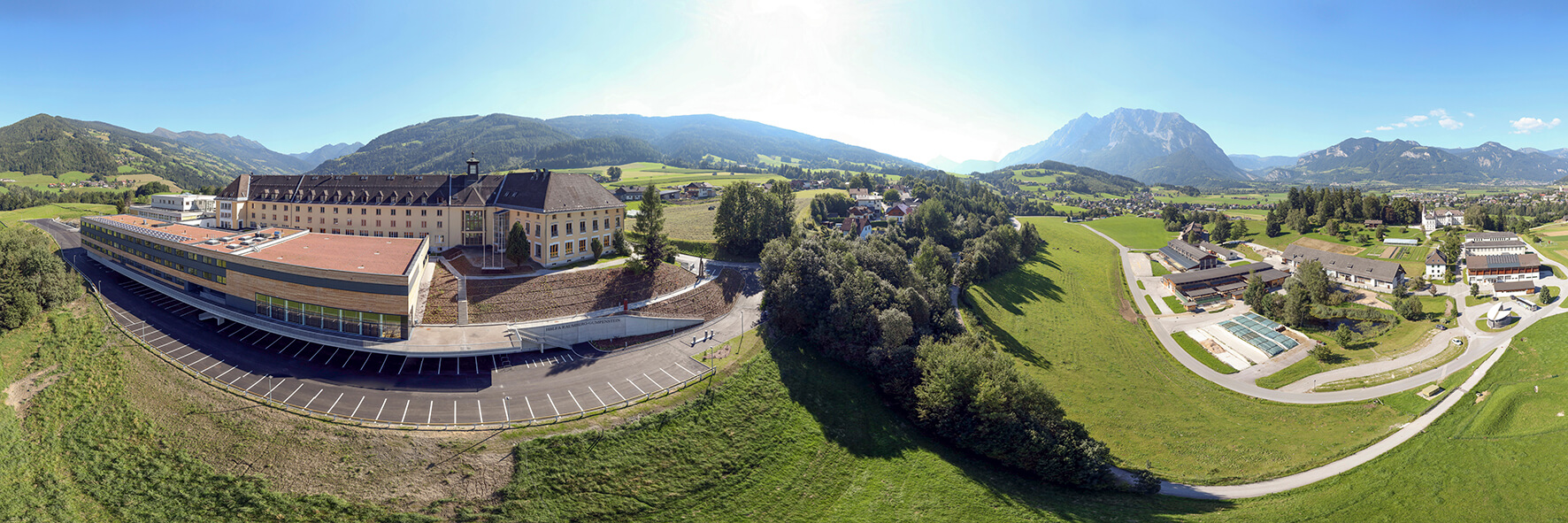
An open-air laboratory at the Trautenfels site for soil water balance and biodiversity in connection with sustainable land use is also available to educational partners from the region.


Photos: HBLFA Raumberg-Gumpenstein/Verena Mayer
