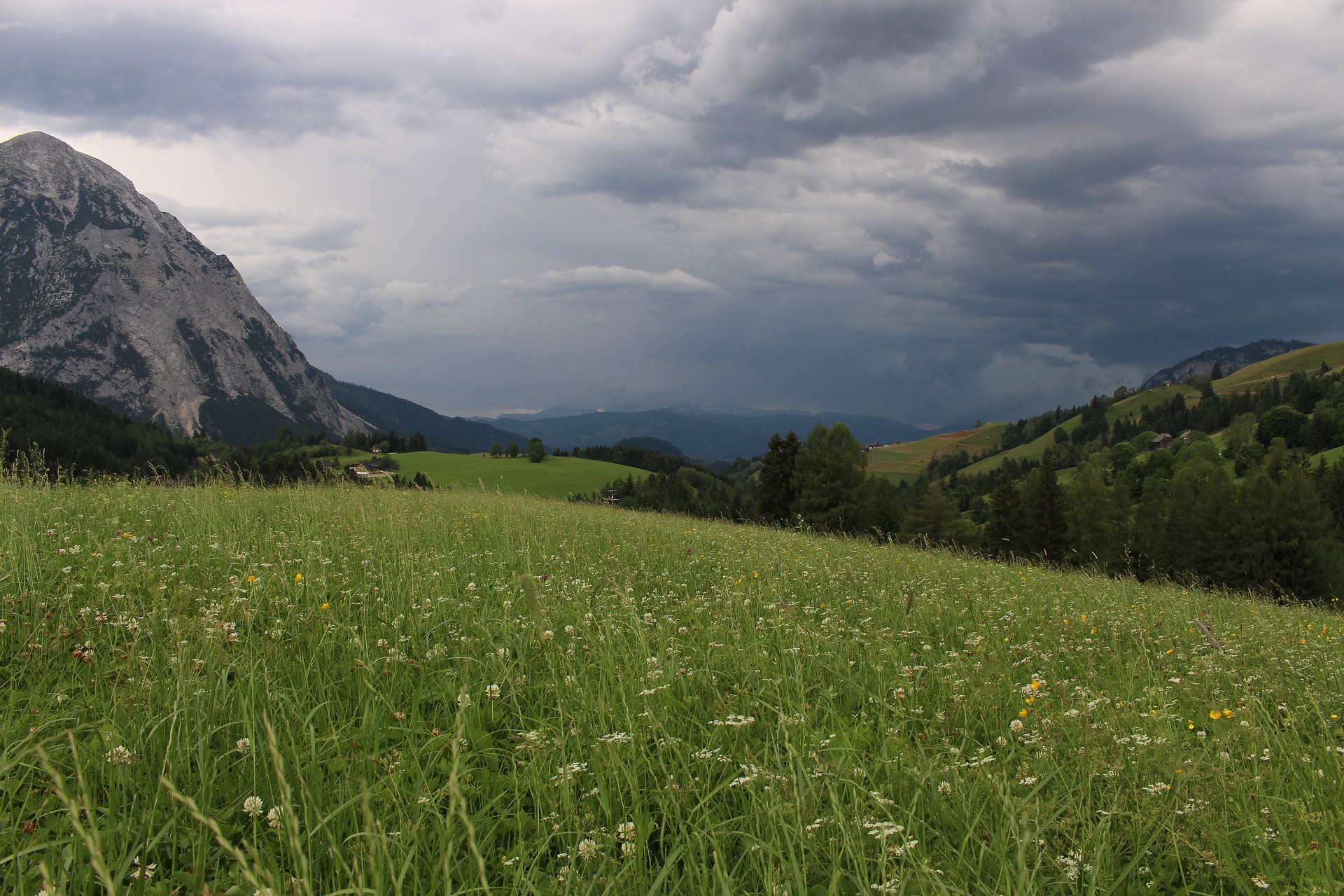
Due to drainage and changes in land management, these typical litter meadows with Siberian iris (Iris sibirica) and star daffodil (Narcissus radiiflorus) have been and continue to be increasingly displaced and are unfortunately only found on a few remaining areas. All the more gratifying, then, is the interest shown by some farmers in preserving and maintaining these areas.
The Trautenfels wildflower meadows are a good example of how the return to greater biodiversity (green infrastructure) can be achieved while simultaneously serving as retention areas for flood protection (blue infrastructure). The collaboration between farmers and conservationists in the "Recultivation of Iris Meadows" project of the HBLFA Raumberg-Gumpenstein has the primary goals of making fallow land usable for agriculture again and, at the same time, restoring and enhancing valuable habitats with site-specific biodiversity.
A diploma thesis by students Andreas Fokter and Martin Hillinger of the HBLFA Raumberg-Gumpenstein documents the essential prerequisites and key steps for this ambitious project. The measures implemented on the wetlands must be tailored to the specific needs of individual species, such as breeding birds, amphibians, and hazel dormice, taking into account weather conditions through gentle soil cultivation at the right time. It is also important to consider that nature needs time to regenerate. A survey demonstrates the strong interest among the local population and landowners in preserving this traditional cultural landscape at the foot of the Grimming mountain.