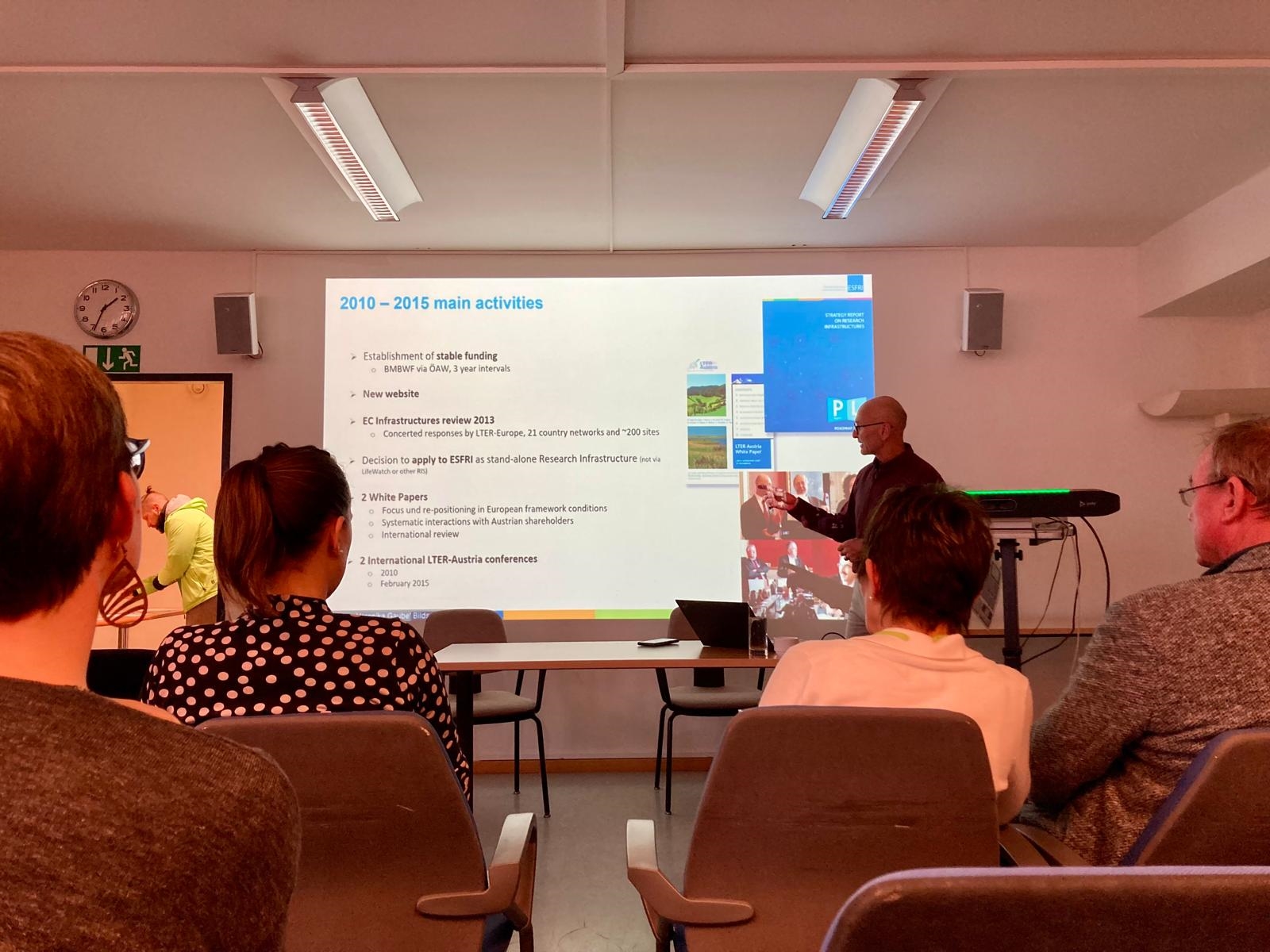
LTER-Austria Conference 2024: A strong commitment to long-term ecological research

LTER-Austria Conference 2024: A strong commitment to long-term ecological research

LTER-Austria Conference 2024: A strong commitment to long-term ecological research

This year's LTER-Austria conference brought together leading environmental researchers in Vienna to discuss the latest findings and strategies for sustainable, long-term ecosystem research and conservation. Renate Mayer and Alina Jenšac from the Acquisitions Unit also participated in the two-day event, which highlighted progress within the European LTER network and provided insights into key projects for a resilient future.

research (LTER ) makes a significant contribution to our understanding of ecosystems. Scientists worldwide are working to gain new insights into the structure and functions of ecosystems, as well as their long-term responses to environmental influences and so-called social and economic drivers. LTER provides valuable information for policymakers and practitioners and contributes to the development of management options to address the challenges of global change. The Austrian Federal Ministry of Education, Science and Research and the Austrian Academy of Sciences (ÖAW) support the important work of the LTER community by again providing a budget for research and network infrastructure for the next three years.
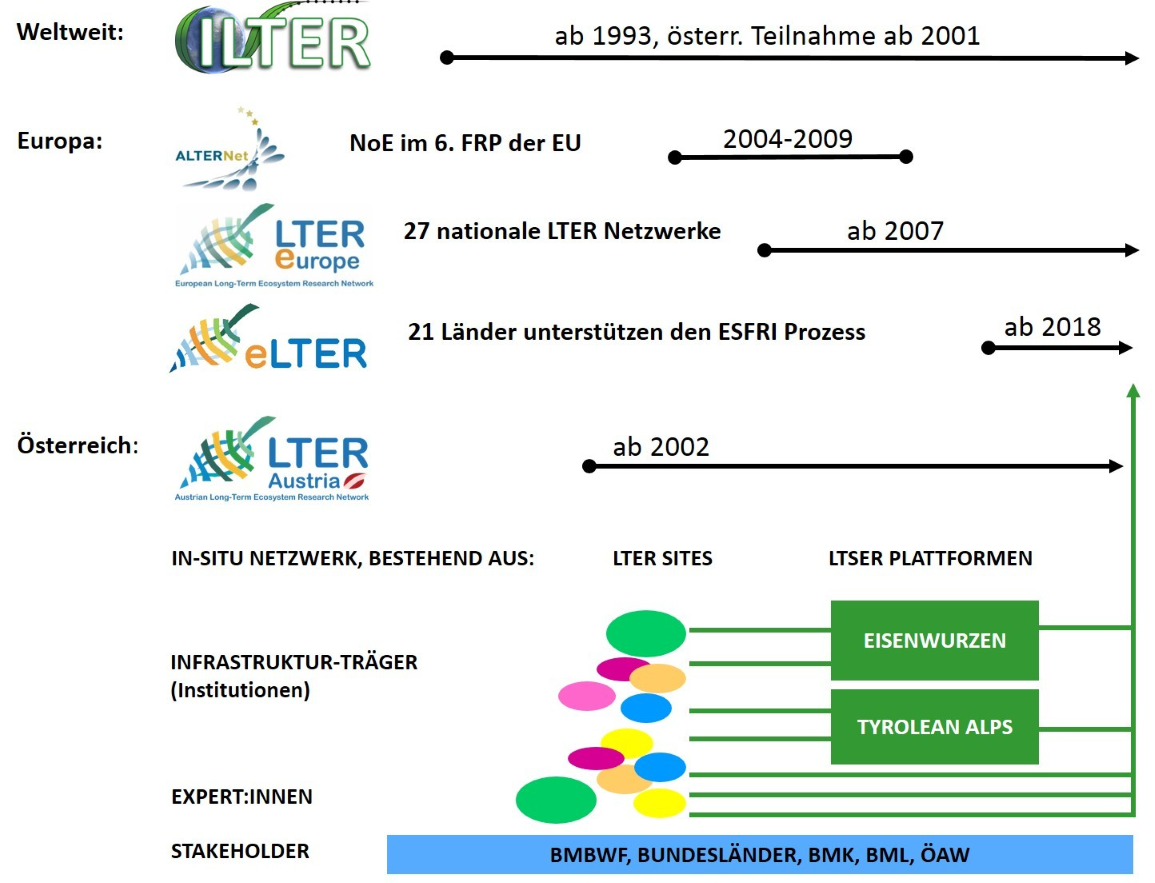
 

Structure of long-term ecological research, Source: https://www.lter-austria.at/

Austria in long-term ecological research, © LTER-Austria 


The HBLFA Raumberg-Gumpenstein is a founding member of the Austrian Society for Long-Term Ecological Research (LTER-Austria) and makes an important contribution to research in managed grassland through its long-term experiments. To this end, it operates a GeoSphereAustria measuring station in Gumpenstein and has been collecting phenological data at the site for many decades. Many projects have already been implemented using the platform's community platform.  

The research fields of LTER-Austria include:

  • Process-oriented ecosystem research

  • Biodiversity and nature conservation research

  • Long-term socio-ecological research (LTSER)
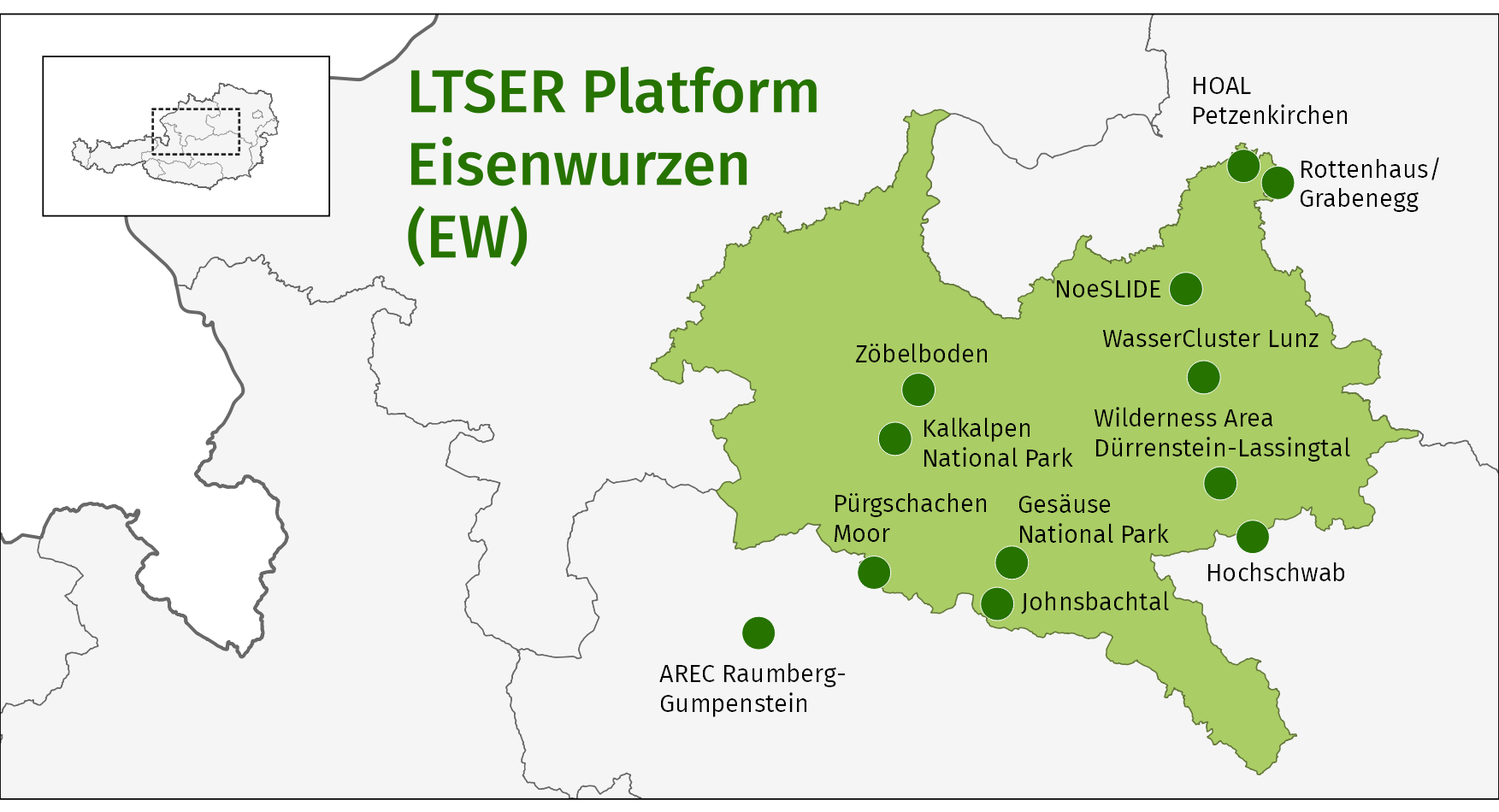
LTSER-Austria now comprises 3 LTSER platforms: LTSER platform Eisenwurzen, Tyrolean Alps and the platform Neusiedler See-Seewinkel, which is currently under construction.

The LTSER platform Eisenwurzen was founded in 2004 as the first Austrian LTSER platform and is part of the European network LTER-Europe (eLTER) as well as the global network (ILTER). It comprises twelve research sites, including the HBLFA Raumberg-Gumpenstein, the Lunz Water Cluster, and the Gesäuse and Kalkalpen National Parks. Various regional institutions and decision-makers actively participate in this platform to create the foundations for sustainable ecosystem management and regional development. Exchange and collaboration with the local population, as well as the integration of regional issues, are central components of its work. 

LTSER Platform Eisenwurzen, Source: https://www.lter-austria.at/ltser-plattform-eisenwurzen-ew/LTSER Platform Eisenwurzen (EW), © LTER-Austria 


On November 11 and 12, 2024, the annual LTER-Austria conference took place at the Institute of Social Ecology at the University of Natural Resources and Life Sciences, Vienna (BOKU ), bringing together leading scientists and institutions dedicated to long-term ecological research and sustainable environmental strategies. The event focused on European-level collaboration within the framework of the developing eLTER research infrastructure and the presentation of current developments in the decision-making process for selecting suitable standard methods for collecting long-term data on the atmosphere, biosphere, geosphere, hydrosphere, and sociosphere . The second day of the conference was dedicated to the exchange of experiences regarding ongoing projects, the general assembly, and the election of the new board.

The conference once again demonstrated the growing importance of long-term ecosystem research for understanding and managing the impacts of climate change and land-use change. With a strong response and numerous contributions from both academia and practice, the event underscored LTER-Austria's goal of further strengthening research on ecosystem resilience in times of climate change and intensifying dialogue with society.