


Project goal
By combining and processing knowledge from research and the region, a foundation is created for sustainable strategies to strengthen the region. The needs of the region are aligned with research objectives as effectively as possible, for the benefit of both the environment and society.
A success story
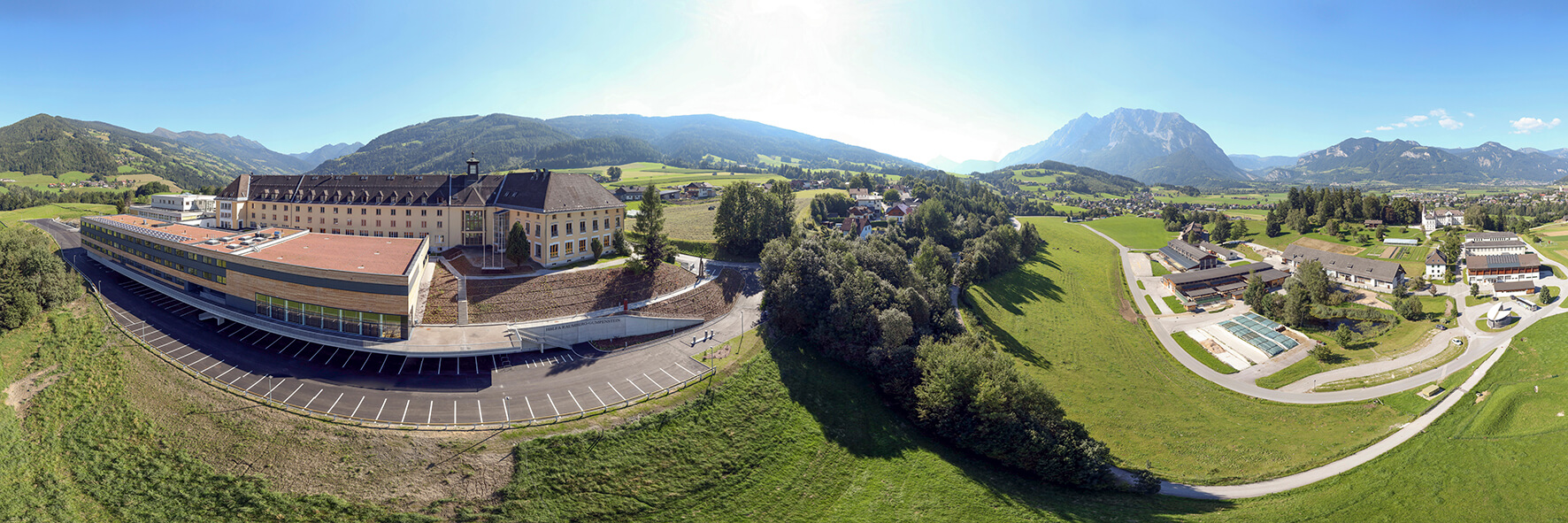
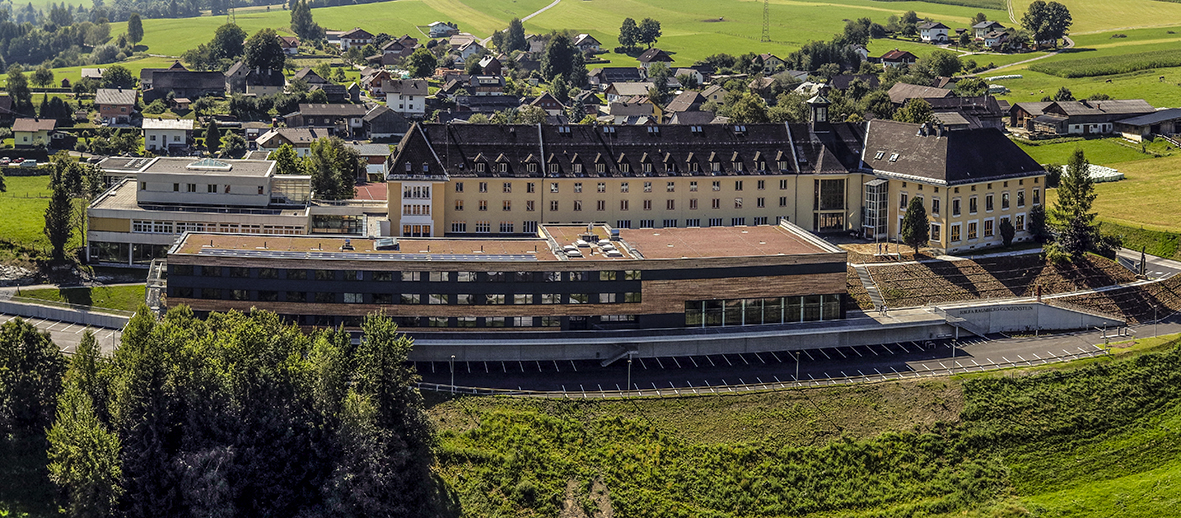
The 20th anniversary of the LTER-Austria Association was celebrated on November 10, 2022, in the ceremonial hall at the University of Natural Resources and Life Sciences, Vienna (BOKU). The HBLFA Raumberg-Gumpenstein, as both a research site and an institution, has been an important partner in the LTER network for 20 years. The development of long-term ecological research in Austria began with a nationwide inventory of projects and institutions for interdisciplinary biodiversity and ecosystem research conducted by the Austrian Network for Environmental Research. This research led to the founding of the Austrian Society for Long-Term Ecological Research (LTER-Austria) in 2002. The ALTER-Net project, part of the European Union's 6th Framework Programme (from 2004 onwards), actively promoted interdisciplinary biodiversity and ecosystem research and led to the development of the pan-European LTER-Europe network of long-term research and monitoring sites, with the participation of HBLFA Raumberg-Gumpenstein. Since 2004, LTER-Austria has been a formal member of the global LTER network and the regional network LTER-Europe.
LTER Austria
LTER is a key driver of long-term ecological research in Europe. Through long-term monitoring of ecosystems, LTER institutions contribute to research at the highest level. These long observation series help to better predict future ecosystem changes in light of climate change. LTER investigates, for example, changes in biodiversity, analyzes the impact of these changes on ecosystem services, and informs policymakers and the public at the European level.
Partners and collaborations
The research infrastructure of the HBLFA Raumberg-Gumpenstein, such as the “Lysi-T-FACE” – a technical experimental concept for simulating global warming in grassland, the ZAMG weather station in Gumpenstein, and the long-term experimental sites, are just as important as the long-term experiments and the associated scientific expertise published in recognized journals. The transfer of scientific findings into practice and teaching, as well as participation in collaborative projects, forms the third pillar of networking. HBLFA Raumberg-Gumpenstein has established particularly valuable collaborations with, among others, the Gesäuse National Park, the Lunz Water Cluster, and AGES (Austrian Agency for Health and Food Safety), including numerous research and educational initiatives. Researchers from around the world also visit the site for their scientific work or utilize the constantly expanding data pool, currently the National Institute of Biology in Ljubljana. The EU's framework program, Horizon Europe, now also supports the LTER network with its locations and the research infrastructures currently under development through various calls for proposals. eLTER is addressing the challenge of understanding the complex interactions between humans, nature, and the environment in the long term.

Ecological sustainability can only be achieved on the basis of sound knowledge and empirical evidence, which are necessary to recognize and mitigate the impact of humans on ecosystems. eLTER promotes scientific knowledge and results through its state-of-the-art research infrastructure, a culture of collaboration, and transdisciplinary expertise. This enables the development and application of evidence-based solutions for the well-being of present and future generations.
The transdisciplinary component is particularly evident in the platforms for long-term socio-ecological research, where human-environment relationships are examined in detail. The LTSER Eisenwurzen platform encompasses a region in the border area of the three Austrian states of Upper Austria, Lower Austria, and Styria, covering approximately 5,904 km²andcomprising 91 municipalities. With its twelve long-term monitoring sites, it has served as a model for the development of research platforms across Europe since 2004. Following the motto "Research as a partner for the region – results from the region for the region and international networks," numerous (inter)national projects have been implemented, initiatives established, and young researchers inspired to engage in long-term ecological research at the sites and within the institutions.

Further information, contact person
HBLFA Raumberg-Gumpenstein, Research Acquisition Unit
DI Renate Mayer,
Mag. Dr. Rita Garstenauer,
Regional Management LTER Platform Eisenwurzen: Gesäuse National Park GmbH
Alexander Maringer, MA
LTER Platform Eisenwurzen Organization: Federal Environment Agency
Mag. Andrea Stocker-Kiss,
Further links:
www.plattform-eisenwurzen.at
www.lter-austria.at
www.ilter.network
https://elter-ri.eu
Federal Ministry of Education, Science and Research (BMBWF)
Information on locations and data is collected in the DEIMS-SDR metadata database (https://deims.org/) and made available for research together with data from all European LTER sites.
Team

DI Renate Mayer
Acquisition
Dr. Andreas Bohner
Environmental ecology
Mag. MSc. Andreas Schaumberger
Head of Institute for Plant Production and Cultural Landscape Research
Mag. Kathrin Blanzano
AcquisitionSimilar projects
2385: VACCI
Evaluation of the fruit-growing potential of autochthonous and selected types of wild bilberry (Vaccinium myrtillus) Subtitle: Cultivation of Vaccinium myrtillus for sustainable use and promotion of regional value creation
2011 - 2014 , Bohner Andreas
2435: Alm-Monitor
Monitoring of selected alpine pasture sites in the Gesäuse National Park with regard to soil and phytodiversity under the influence of climate change
2016 - 2019, Bohner Andreas
2472: CASAS-C-Sequest
Carbon sequestration in Austrian grassland soils - KLIEN project
2020-2023, Andreas Bohner
2821: WT Alternet Gesäuse National Park
Land abandonment and vegetation change in open landscapes
2005 - 2006, Bohner Andreas
3649: WT Alm20
Forage value, phenology and stand structure of alpine pastures in a 20-year comparison
2016 - 2018, Blaschka Albin