The Austrian Agri-Environmental Programme (ÖPUL) is celebrating its 30th anniversary this year – an occasion that was also acknowledged by the scientific community during a press tour in Upper Austria. Dr. Andreas Bohner from the HBLFA Raumberg-Gumpenstein emphasized the significant ecological benefits of the programme for agriculture, landscape and biodiversity.
Dr. Andreas Bohner: “ÖPUL ensures biodiversity in agriculture”
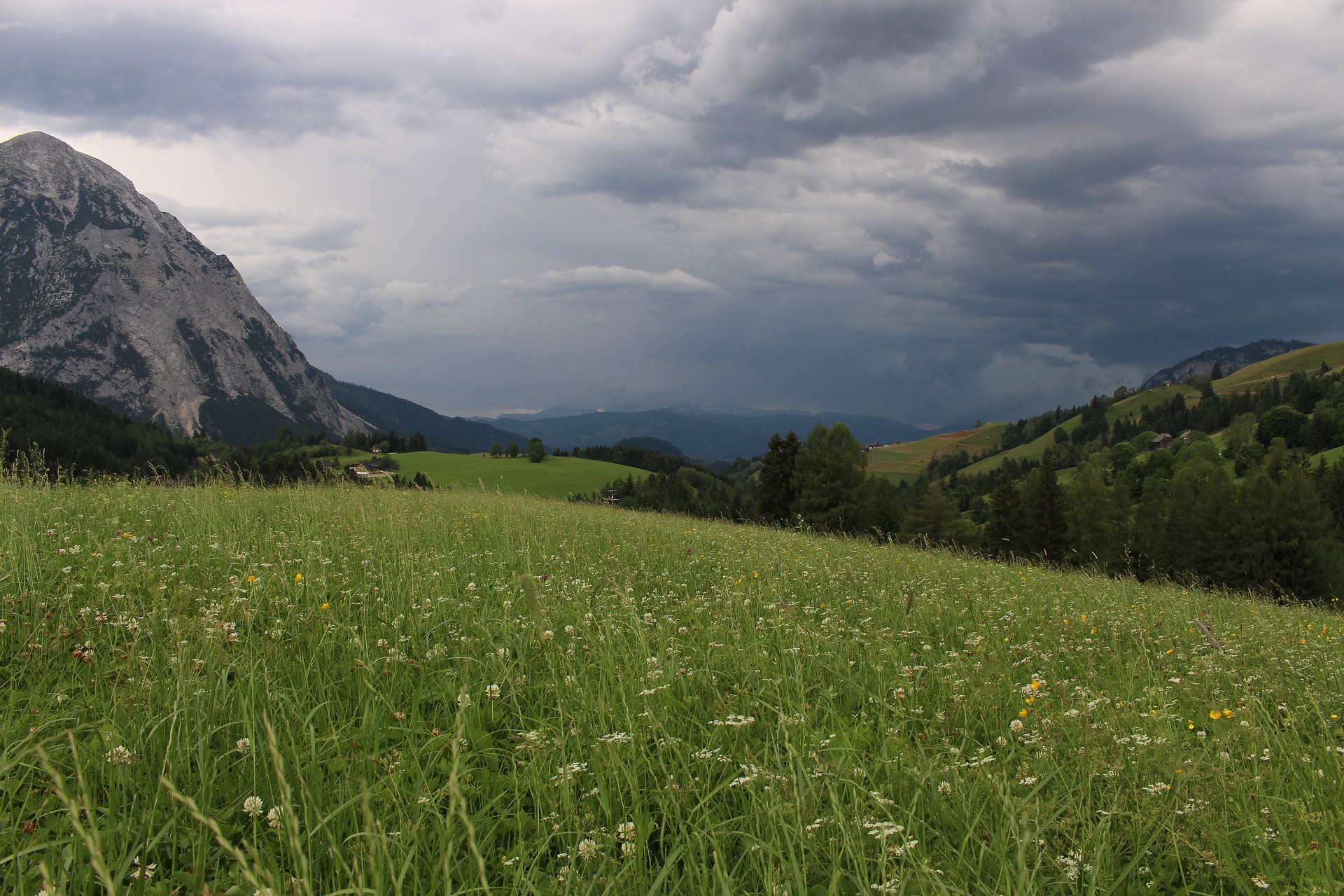
Vegetation ecologist Dr. Andreas Bohner, scientific director of the Department of Environmental Ecology at the HBLFA Raumberg-Gumpenstein, emphasized that the Austrian Program for Environmentally Sound Agriculture (ÖPUL) is a model for Europe that harmonizes agriculture and environmental protection: "The more diverse our agricultural practices, the more diverse the landscape – and thus the biodiversity." Alpine habitats such as alpine pastures and mountain meadows are particularly unique in their biodiversity, Bohner stressed. "These species-rich areas were only created through agricultural use. Without their maintenance by farmers, they would become overgrown with shrubs and lose many rare species." Using the Northern Limestone Alps in Upper Austria as an example, Bohner illustrated that numerous so-called endemic species – species found only there – are native to the region. The continued existence of these sensitive ecosystems depends directly on active alpine farming, which is promoted by ÖPUL measures such as "nature conservation."
Agriculture and nature conservation: An Austrian success story
Around 80% of Austrian farms voluntarily participate in the Austrian Program for Environmentally Sound Agriculture (ÖPUL) measures. This resulted in a total of 240,000 hectares of biodiversity areas being created in 2025 – a considerable increase that was also acknowledged by the Chambers of Agriculture. Josef Moosbrugger (Chamber of Agriculture Austria) and Franz Waldenberger (Chamber of Agriculture Upper Austria) emphasized the important role of incentive systems compared to mandatory requirements. Farmer Michaela Spachinger from Upper Austria added the practical perspective: ÖPUL enables sustainable farming practices without losing sight of economic viability. Her appeal: more flexibility, less bureaucracy.
Further information:
Farmers and biologists are calling for the continuation of the agri-environmental program.